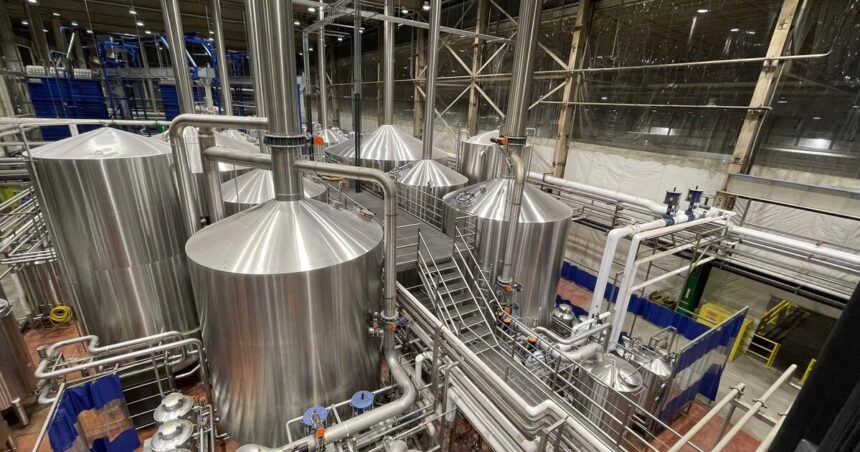
Article – The smell of malt, a row of specialized equipment, and a classroom full of excited students – this familiar scene at the American Brewers Guild will soon have a new home: Montreal.
After nearly three decades of training America’s craft brewing talent from Vermont, the Guild announced yesterday it’s crossing the border to establish its new headquarters in Montreal’s bustling Mile End neighborhood.
“This isn’t just a relocation, it’s a renaissance,” says Alan McKay, the Guild’s Director of Operations, whose Vermont office walls are already half-packed into cardboard boxes. “Montreal offers us an extraordinary brewing culture, bilingual advantage, and frankly, a more supportive regulatory framework.”
The move represents more than just a change of address for North America’s premier brewing education institution. It signals a shift in the craft brewing educational landscape that has industry veterans paying attention.
Founded in 1995 during the first major wave of American craft brewing enthusiasm, the Guild has trained over 2,800 professional brewers who’ve gone on to launch some of the continent’s most celebrated beer brands. Alumni have opened more than 340 breweries across 48 states and seven Canadian provinces.
The Guild’s 22-week intensive Craftbrewer certification program combines online learning with hands-on apprenticeships at working breweries. It’s this practical approach that’s made their graduates so sought after.
“I wouldn’t be where I am without their training,” explains Sarah Horowitz, head brewer at Toronto’s Eastbound Brewing and a 2018 graduate. “When I heard they were moving to Canada, I felt this weird national pride – like we’re gaining something special.”
What prompted this cross-border migration? The answer involves economics, changing consumer trends, and strategic foresight.
Canadian craft brewing has surged in the last decade, with the number of microbreweries doubling since 2015. Quebec alone has seen a 36% increase in craft brewing licenses in the past five years, according to provincial records. Meanwhile, U.S. craft beer growth has plateaued, with industry data showing a 1.6% decline in overall volume in the past year.
“The regulatory environment in Quebec is particularly advantageous,” explains Caroline Deschênes, the Guild’s newly appointed Canadian Operations Director. “The province’s alcohol laws allow for more direct-to-consumer sales opportunities, and there’s substantial government support for educational institutions that develop specialized trades.”
That government support includes a $3.2 million grant from Investissement Québec to establish the Guild’s new 18,000-square-foot teaching facility, which will include a fully operational production brewery, laboratory, and sensory analysis center.
Montreal’s economic development corporation suggests the move will create approximately 45 direct jobs and potentially hundreds more as graduates establish new brewing operations throughout the region.
“We’re seeing a knowledge economy play out in real time,” says Marc Desjardins, an economic analyst with Montreal International. “Instead of competing for manufacturing, we’re attracting institutions that develop intellectual capital. These graduates will start businesses, innovate products, and employ others.”
The Guild’s relocation also reveals how geopolitical shifts affect even niche educational sectors. Canada’s more open immigration policies played a decisive role in the decision.
“We have students applying from Brazil, Japan, South Africa – truly worldwide,” McKay explains. “The Canadian student visa process has proven much more accommodating for our international students, who make up about 25% of our enrollment.”
The craft brewing industry itself has evolved dramatically since the Guild’s founding. What began as a counterculture movement against mass-produced lagers has matured into a sophisticated sector with specialized roles in quality assurance, production management, and ingredient development.
This evolution demands more technical education. A Guild survey of 200 North American breweries revealed 72% now require formal training for brewing positions, compared to just 28% a decade ago.
For Montreal’s existing brewing community, the Guild’s arrival is largely welcomed, though not without some apprehension.
“We’re excited about the concentration of talent and resources,” says Pierre Tremblay of Montreal’s Brasserie Harricana. “But there’s also concern about market saturation if they produce too many new brewers too quickly.”
The Guild says it plans to integrate thoughtfully with the local scene, having already established apprenticeship partnerships with eight Quebec breweries. They’ll also develop a French-language curriculum within two years – a critical component for success in Quebec.
The relocation begins next month, with the first Montreal-based cohort scheduled to begin classes in January. The Guild expects to be fully operational by spring, coinciding with the seasonal uptick in beer consumption.
For Canadian brewing enthusiasts, the Guild’s arrival reflects broader shifts in North American craft beer culture. While Portland, Denver and Asheville have long been considered the continent’s brewing education hubs, Montreal is positioning itself as the new center of brewing excellence.
“Beer itself has always ignored borders,” reflects McKay, gazing at his office’s bare walls. “The same should be true for brewing education. The science, art, and craft of brewing belongs wherever the enthusiasm and support exists. Right now, that’s Montreal.”