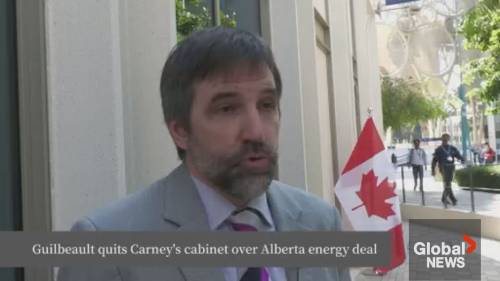
The resignation of Steven Guilbeault from his post as Environment Minister sent shockwaves through Ottawa yesterday, marking one of the most significant Cabinet departures in recent memory. Sources close to the situation confirm the split stems from fundamental disagreements over energy policy direction, particularly regarding pipeline approvals being championed by newly-appointed Treasury Board President Mark Carney.
“I cannot, in good conscience, continue to serve in a government that appears to be shifting away from the climate commitments we made to Canadians,” Guilbeault told reporters in a hastily arranged press conference outside his constituency office in Montreal.
The departure creates not just a Cabinet vacancy but exposes deepening fissures within Liberal ranks about Canada’s energy transition timeline. As someone who’s covered four federal election cycles, I’ve rarely witnessed such a public display of policy discord from this government.
What makes this resignation particularly striking is Guilbeault’s environmental pedigree. Before entering politics, he co-founded Équiterre and worked as Quebec director for Greenpeace – credentials that lent significant credibility to Liberal climate promises. His departure raises questions about the government’s commitment to its emissions reduction targets of 40-45% below 2005 levels by 2030.
During my conversation with Kathryn Harrison, political scientist at UBC, she emphasized the symbolic weight of this resignation. “Guilbeault wasn’t just any minister. He represented the environmental conscience of this government. His departure suggests a significant shift in priority or an irreconcilable policy disagreement.”
The timing couldn’t be more problematic for Prime Minister Trudeau, who faces sagging poll numbers and mounting pressure to address affordability concerns. According to the latest Abacus Data poll, the Liberals trail the Conservatives by nearly 10 points nationally, with particularly concerning numbers in British Columbia – a province where pipeline politics remain divisive.
Inside sources reveal the breaking point came during cabinet discussions about expediting approval for the proposed Northern Gateway extension project. Mark Carney, still finding his footing in partisan politics after his transition from central banking, has reportedly championed a more pragmatic approach to energy infrastructure as part of Canada’s economic competitiveness strategy.
“There’s always been tension between our climate objectives and economic priorities,” explained a senior Liberal staffer who requested anonymity. “Guilbeault’s departure represents the moment when that tension became unsustainable.”
In Vancouver last month, I spoke with several environmental activists who warned this exact scenario might unfold. “The minute Carney entered Cabinet with his Bay Street perspective, we knew this could spell trouble for climate commitments,” said Jamie Hartford of Climate Action Now.
The resignation has already triggered reactions across the political spectrum. Conservative leader Pierre Poilievre wasted no time capitalizing on the moment, calling it “further evidence of a government in disarray with no coherent economic or environmental plan.”
NDP leader Jagmeet Singh characterized the situation as proof the Liberals “were never serious about climate action,” potentially threatening the supply-and-confidence agreement that has kept the minority government afloat.
What happens next remains uncertain. Parliament Hill insiders suggest Energy Minister Jonathan Wilkinson might assume the environment portfolio temporarily, though finding someone with Guilbeault’s environmental credibility will prove challenging.
For communities along proposed pipeline routes, this political drama in Ottawa has real-world implications. In Kitimat, B.C., where I visited during a reporting trip last fall, residents remain divided about increased tanker traffic and environmental risks.
“We’ve been through this cycle of promises and disappointments before,” said Ron Mitchell, a Haisla Nation member involved in resource development consultations. “What matters isn’t who sits in which chair in Ottawa, but whether Indigenous rights and environmental protections are truly respected in the process.”
The resignation also reveals the competing pressures facing the Trudeau government. With inflation still pinching household budgets across the country and housing affordability reaching crisis levels, economic growth arguments carry significant political weight. Yet climate policy reversals risk alienating a key segment of the Liberal voter base, especially in urban ridings where environmental concerns rank high.
As former Environment and Climate Change Canada economist Dave Sawyer told me, “The fundamental challenge hasn’t changed – balancing economic transition with climate action. But losing your environmental standard-bearer makes that balancing act much harder to communicate convincingly.”
What’s clear is that Guilbeault’s departure has created both a policy and communications challenge for the government heading into a difficult pre-election period. Whether this represents a temporary setback or a more fundamental shift in Liberal climate policy priorities remains to be seen.
For Canadians concerned about both economic stability and climate action, the resignation forces a difficult question: can these objectives truly coexist in our current political framework, or are we destined for perpetual policy whiplash as governments navigate these competing priorities?
The answer may well determine not just the future of Canada’s climate commitments, but the electoral fortunes of a Liberal government increasingly caught between promises made and practical politics.