The art studio at London’s Westmount Community Centre hums with quiet concentration. A dozen participants bend over canvases, lost in swirls of color and texture. This isn’t just an art class – it’s one of the city’s growing number of art therapy programs addressing mental health challenges through creative expression.
“I couldn’t find words for what I was feeling,” says Marta Jankowski, a 43-year-old London resident who began attending sessions after being diagnosed with depression. “But somehow, putting brush to canvas helped me express emotions I couldn’t name. It became my voice when words failed.”
Art therapy has taken root across London, Ontario, with programs expanding by nearly 30% since 2019, according to the Canadian Art Therapy Association’s regional data. This growth reflects a broader shift in mental health treatment approaches that increasingly recognize creative therapies as legitimate clinical interventions.
At London Health Sciences Centre, registered art therapist Katherine Breton has witnessed this evolution firsthand. “We’re seeing referrals from psychiatrists, family doctors, and community mental health teams who recognize that traditional talk therapy isn’t always enough,” Breton explains as she arranges supplies for an afternoon session. “Art bypasses our analytical brain and taps directly into emotional processing centers. Some patients make breakthroughs with art that years of conventional therapy couldn’t achieve.”
The science supports this observation. A 2021 study from Western University’s psychology department found that participants in structured art therapy showed measurable reductions in anxiety and depression markers compared to control groups. The research, led by Dr. Samantha Yamada, demonstrated how creative expression activates neural pathways associated with emotional regulation and self-awareness.
London’s commitment to mental health through art became more visible last year when the provincial government awarded a $175,000 grant to expand community-based creative therapy programs. The funding established new initiatives at four community centers across the city, making services accessible to populations that traditionally face barriers to mental health support.
One such program operates at the Cross Cultural Learner Centre, where newcomers to Canada work through transition trauma and displacement stress. “Art transcends language barriers,” notes program director Hassan Ahmed. “When you’ve fled violence or persecution and are struggling with English, traditional therapy can be challenging. But everyone can express themselves through color and shape.”
The pandemic’s mental health toll has only intensified interest in alternative therapeutic approaches. London’s Mental Health Coalition reports that waitlists for conventional therapy services have stretched to 8-12 months for non-emergency cases. Art therapy programs, often operating in group settings, can serve more individuals while creating valuable peer support communities.
“There’s something powerful about creating alongside others who understand your struggles,” says Tim Reynolds, who attends a veterans’ art therapy group at the London Legion. “We don’t even have to talk about our experiences. Something happens in that shared creative space that helps us process things we’ve carried for years.”
Critics initially questioned whether art therapy deserved healthcare funding, arguing for prioritization of evidence-based clinical interventions. But as research accumulates and patient outcomes improve, even skeptics have begun acknowledging its value in comprehensive treatment plans.
Dr. Ellen Richardson, Chief of Psychiatry at St. Joseph’s Health Care London, counts herself among the converted. “I was traditional in my approach for decades,” she admits. “But watching patients transform through creative expression changed my perspective. Now I regularly incorporate art therapy referrals into treatment planning, especially for patients who’ve plateaued with conventional approaches.”
London’s approach is being watched by other mid-sized Canadian cities hoping to replicate its success. Representatives from Kingston and Guelph recently visited to observe programs at the London Arts Council’s mental health initiative, where professional artists collaborate with therapists to design specialized workshops.
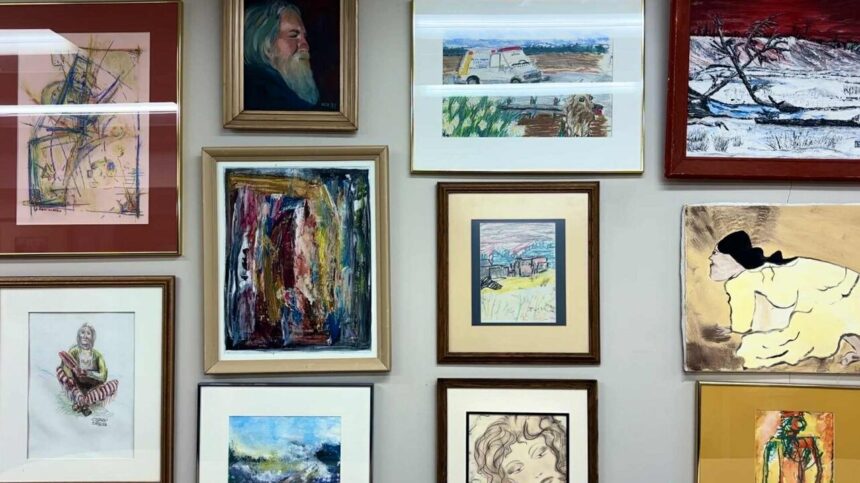
For participants, the benefits extend beyond symptom reduction. Many discover talents they never knew existed and develop identities beyond their diagnoses. Weekly exhibitions at the Westmount Community Centre showcase work created in therapy sessions, with artists proudly discussing their pieces with visitors.
“Before art therapy, I was ‘Jane with anxiety,'” says Jane Morelli, standing beside her series of textured landscapes. “Now I’m ‘Jane the artist’ who happens to manage anxiety. That shift in identity has been transformative.”
As winter approaches – typically a challenging time for mental health – London’s art therapy programs are preparing for increased demand. New evening sessions have been added at three locations, and a mobile art therapy van will begin visiting underserved neighborhoods in January.
The city’s investment seems well-placed. Hospital admissions for mental health crises have decreased 8% in areas with active community art programs, according to preliminary data from the Middlesex-London Health Unit.
For Marta Jankowski, statistics are less meaningful than personal experience. “I measure success by the days I feel whole again,” she says, cleaning her brushes after a two-hour session. “Art didn’t cure my depression, but it gave me tools to understand it and express what I’m going through. Some days, that makes all the difference.”
As London continues developing its mental health infrastructure, art therapy’s place seems increasingly secure – not as a replacement for traditional approaches, but as a vital complement in the continuum of care. And for many Londoners finding their way through mental health challenges, that creative pathway offers hope where other roads have ended.