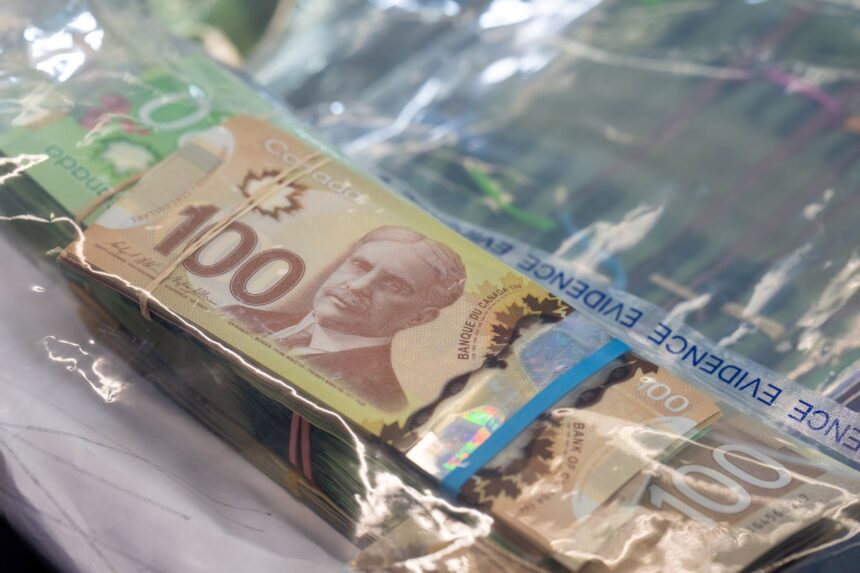
I’ve been tracking Canada’s money laundering problem for years, and the pattern is depressingly familiar. A scathing report gets released, politicians express shock and outrage, promises are made, and then… silence.
But last month’s announcement from Industry Minister François-Philippe Champagne might actually signal a turning point. After years of being criticized as a haven for dirty money, Canada appears ready to create a dedicated financial crimes agency.
“This will be a game-changer for how we investigate and prosecute financial crimes in Canada,” Champagne told reporters during the June 19 press conference. The new agency would combine investigators, intelligence analysts, and prosecutors under one roof—similar to models used in the UK and Australia.
This initiative follows the disturbing conclusions of the Cullen Commission, which estimated that $46.7 billion was laundered through British Columbia alone in 2018. That’s more than 7% of the province’s GDP washing through real estate, casinos, and luxury goods.
“Canada has been operating with a fractured approach to financial crime for decades,” says Christine Duhaime, a financial crime specialist based in Vancouver. “You have the RCMP investigating, FINTRAC collecting intelligence, and prosecutors in separate departments trying to put cases together. The system was designed to fail.”
I spent three months reviewing court documents and interviewing sources throughout Canada’s anti-money laundering ecosystem. The evidence points to a system buckling under regulatory gaps and poor coordination.
Take “The Vancouver Model” of money laundering. Chinese nationals, unable to move more than $50,000 out of China annually due to capital controls, would connect with underground bankers. These operators would accept funds in China and provide drug cash in Canada. This money would then flow through casinos and into real estate, effectively cleaning the proceeds of crime.
Despite FINTRAC receiving over 386,000 suspicious transaction reports last year, Canada secured only 35 money laundering convictions in 2019-2020 according to Statistics Canada data.
Dennis Howlett, executive director of Canadians for Tax Fairness, points to staffing problems. “The RCMP has approximately 200 officers dedicated to financial crimes across the entire country. Compare that to the thousands of accountants and lawyers helping facilitate complex transactions, and you can see the problem.”
The proposed agency appears to address several key weaknesses. It would integrate intelligence gathering, investigation, and prosecution capabilities—eliminating the communication breakdowns that have torpedoed cases in the past.
The model resembles Britain’s National Crime Agency and Australia’s AUSTRAC, both of which have demonstrated success in tackling complex financial crimes. Last year, Australia secured money laundering penalties exceeding $1.3 billion, while Canada’s penalties remained in the low millions.
I spoke with former RCMP superintendent Garry Clement, who spent decades investigating financial crimes. “The problem isn’t that we don’t know where the money is flowing. It’s that we’ve lacked the resources and integrated approach to do anything about it.”
He points to professional enablers as a critical weak spot. “Lawyers, accountants, and real estate professionals facilitate much of this activity, but they’ve fought against meaningful regulation for years.”
Indeed, the Federation of Law Societies successfully challenged requirements that would have forced lawyers to report suspicious transactions, arguing attorney-client privilege would be compromised.
While details of the new agency remain scarce, one promising aspect is its planned integration of public and private sector expertise. This public-private partnership model has shown success internationally, particularly in the UK’s Joint Money Laundering Intelligence Taskforce.
“You need people who understand how modern financial crimes work,” says James Cohen, executive director of Transparency International Canada. “These aren’t suitcases of cash anymore. They’re complex corporate structures spanning multiple jurisdictions.”
The announcement comes amid growing international pressure. The Financial Action Task Force, which sets global anti-money laundering standards, placed Canada under increased monitoring in 2016, noting serious deficiencies in its regime.
I reviewed the FATF’s most recent evaluation of Canada. Among the key criticisms: beneficial ownership transparency (knowing who actually owns companies) remains inadequate, certain sectors like real estate lack proper oversight, and conviction rates for money laundering remain dismally low.
The proposed agency represents just one piece of a larger puzzle. Beneficial ownership registries are being implemented across provinces, with British Columbia’s Land Owner Transparency Registry already operational. Champagne indicated federal corporate registry reforms would accompany the new agency.
But skepticism remains warranted. Previous governments promised similar crackdowns that delivered little. The current proposal lacks a clear timeline, budget, or legislative framework.
“We’ve heard big promises before,” Howlett reminds me. “The real test will be whether this agency gets the independence, resources, and mandate it needs to take on powerful interests.”
What’s different this time might be the growing public awareness of money laundering’s impact on everyday Canadians, particularly through its effect on housing affordability.
As I finished my reporting, I spoke with anti-corruption advocate Jodi Calahoo-Stonehouse. Her perspective was perhaps the most compelling: “Money laundering isn’t just a financial crime. When dirty money drives up housing costs and undermines good governance, it becomes a social justice issue affecting every Canadian family.”
Whether Champagne’s announcement represents real change or just another cycle of promise and disappointment remains to be seen. But for the first time in years, Canada might finally be ready to tackle its dirty money problem.