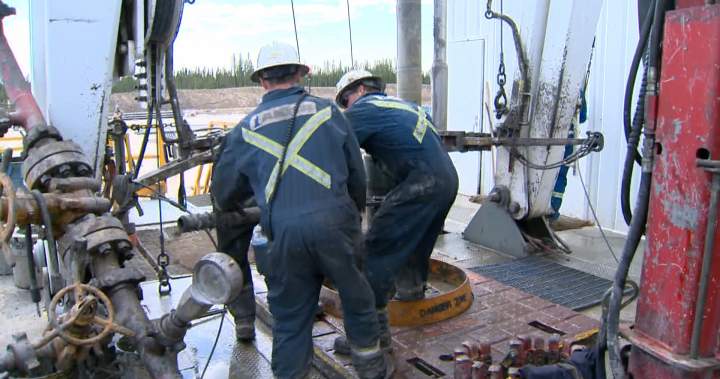
The Canadian drilling landscape appears set for a modest rebound next year, though the trajectory remains far from the booming days of past cycles. After weathering persistent challenges throughout 2024, the industry is cautiously eyeing growth prospects for 2025.
The Canadian Association of Energy Contractors (CECA) recently released projections suggesting the country will see 5,650 wells drilled in 2025, representing a 5% increase from this year’s expected total of 5,365. While any upward movement offers welcome news for the sector, this forecast underscores the measured pace of recovery in Canada’s oil patch.
“We’re seeing signs of stabilization, but this isn’t the rapid expansion some might have hoped for,” says Mark Scholz, CECA’s president. “Operators remain disciplined with capital expenditures, prioritizing shareholder returns over aggressive growth.”
This restrained outlook comes despite relatively favorable oil prices, which have generally hovered between $70-80 per barrel for much of 2024. Natural gas prices, however, continue to struggle with oversupply issues, creating a mixed picture for producers focused on different resource types.
The drilling landscape in Western Canada reflects broader trends reshaping the industry. Companies now emphasize operational efficiency and targeted development rather than the widespread exploration campaigns that characterized previous decades. This shift means doing more with less – maximizing production from fewer but more sophisticated wells.
Employment prospects remain a particular concern across the sector. CECA estimates direct and indirect jobs supported by drilling activity will reach approximately 33,800 in 2025, up marginally from 32,190 in 2024. While this represents incremental improvement, it falls dramatically short of the over 100,000 jobs the industry supported during peak years.
“The skills transition happening in the energy sector creates both challenges and opportunities,” explains Emma Carson, an energy economist at the University of Calgary. “Many workers have left for more stable industries, creating potential labor constraints if activity accelerates more rapidly than expected.”
Regional differences remain pronounced across Western Canada’s producing areas. Alberta continues to claim the lion’s share of drilling activity with approximately 3,700 wells expected next year, while Saskatchewan targets around 1,650. British Columbia, primarily focused on natural gas, anticipates roughly 300 wells.
The modest growth forecast arrives against a backdrop of evolving market dynamics. Canadian producers have worked diligently to improve their competitive position by reducing costs and embracing technological innovations. Advances in horizontal drilling and multi-stage completions allow companies to extract more resources from each well, effectively doing more with less.
Pipeline capacity – long a constraint for Canadian producers – has shown improvement with the completion of TMX (Trans Mountain Expansion), though differentials between Canadian and global benchmark prices persist. This infrastructure progress provides some confidence for producers considering expansion plans.
Environmental considerations continue reshaping industry practices. Producers face heightened scrutiny regarding emissions profiles, water usage, and land disturbance. Many larger companies have committed to ambitious emission reduction targets, necessitating new approaches to traditional operations.
“The industry continues adapting to evolving regulatory frameworks and investor expectations around environmental performance,” notes Patricia Thomson, director at the Energy Futures Network. “Companies that demonstrate credible decarbonization strategies typically enjoy better access to capital.”
Indigenous partnerships represent another evolving dimension of Canada’s energy landscape. Several First Nations have pursued equity stakes in energy projects, creating more inclusive development models. These partnerships often provide meaningful economic opportunities for communities while establishing new collaborative frameworks.
The technological transformation of drilling operations continues unabated. Automation, digitalization, and remote monitoring capabilities have dramatically changed rig operations. Modern drilling rigs incorporate sophisticated control systems that improve safety while reducing environmental impacts – though these advances often mean fewer workers required per site.
Looking ahead, industry observers identify several factors that could alter next year’s trajectory. Any sustained drop in oil prices below $65 per barrel would likely trigger activity reductions, while a significant natural gas price recovery could stimulate additional drilling in gas-focused regions. Regulatory changes, particularly around carbon pricing mechanisms, also remain influential.
International dynamics similarly affect Canadian drilling prospects. Competition from American producers in the prolific Permian Basin continues shaping investment decisions, while global supply dynamics, including OPEC+ production policies, influence commodity price outlooks.
While the forecast suggests measured optimism, the sector’s focus has fundamentally shifted from the aggressive growth models of past cycles. Today’s Canadian energy producers emphasize capital discipline, operational excellence, and sustainable development practices – even as they navigate the broader energy transition.
For communities tied to drilling activity, this moderate growth forecast suggests stability rather than dramatic expansion. This reality demands ongoing economic diversification efforts in regions historically dependent on oil and gas development.
As 2025 approaches, Canada’s drilling sector appears poised for cautious advancement rather than transformative growth. The 5% increase in activity reflects an industry adapting to new economic and environmental realities while maintaining its role in Canada’s energy landscape.