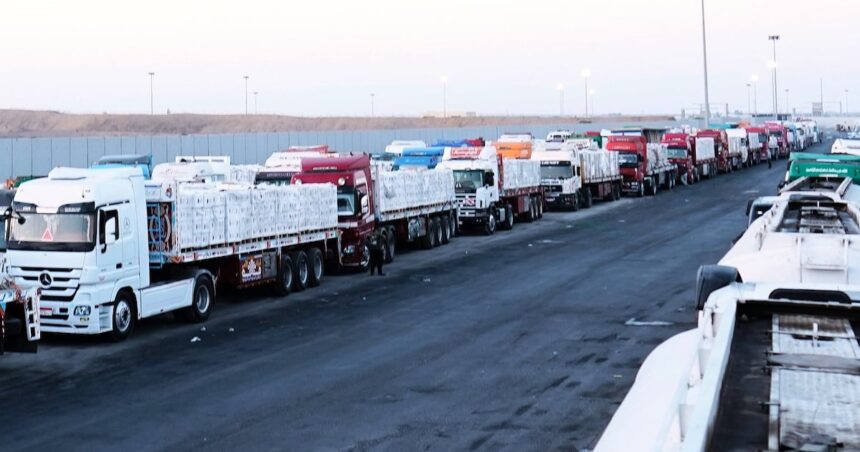
I watched the sun rise over Rafah last Tuesday, illuminating the chaotic scene at the reopened border crossing where hundreds of Palestinians waited with documentation in hand, desperate to exit Gaza after months of near-total border closure. The rhythmic thud of distant artillery provided a grim soundtrack to what Israeli authorities are calling a “humanitarian gesture” in a war that has left few gestures to celebrate.
“I’ve been here since 3 a.m.,” whispered Samira Khalidi, a 38-year-old university professor clutching her Egyptian entry permit and medical records. “My daughter needs surgery we cannot get in Gaza. We’ve applied seven times since December.”
The border crossing reopened this week under highly restrictive conditions, allowing only Palestinians with foreign passports, serious medical conditions, or special humanitarian permissions to leave through the southern Rafah gate. This development comes after sustained pressure from international humanitarian organizations and regional mediators attempting to ease the catastrophic humanitarian situation inside the besieged territory.
According to the United Nations Office for Coordination of Humanitarian Affairs (OCHA), approximately 2,700 Palestinians were permitted to exit in the first three days since reopening—a tiny fraction of Gaza’s 2.3 million population now largely displaced by the conflict. Israeli officials maintain strict security protocols, inspecting each case individually for potential security concerns before granting passage.
The decision to reopen the crossing came after negotiations involving Egyptian mediators, Qatari diplomats, and American envoys pushing for incremental humanitarian relief. However, Palestinian authorities and human rights observers question whether this represents genuine progress or merely a symbolic gesture amid continued military operations throughout Gaza.
“They’re letting out dozens while bombing thousands,” remarked Mohammed El-Kurd, a Gaza health ministry official I spoke with via secure messaging. “The crossing operates on Israeli terms, opening and closing without warning, making escape a lottery few can win.”
Those fortunate enough to receive exit permissions face a bureaucratic gauntlet. The Israeli military’s Coordination of Government Activities in the Territories (COGAT) issues permits through a verification system that Palestinians describe as opaque and inconsistent. Many approved travelers report waiting days at the crossing before actually being allowed through.
The World Health Organization estimates over 8,500 Palestinians require urgent medical evacuation for conditions untreatable in Gaza’s collapsed healthcare system. Dr. Tedros Adhanom Ghebreyesus, WHO Director-General, called the situation “catastrophic” during an emergency briefing last week, noting that only a small percentage of critical cases have received clearance to leave.
I witnessed Egyptian ambulances waiting at the border to transport the most serious medical cases. Yousef Mashharawi, a 12-year-old with shrapnel wounds and a partially amputated leg, was carried across on a stretcher—one of the 47 injured children granted passage that day according to border officials.
“He needs specialized reconstructive surgery,” his uncle told me, visibly exhausted. “We applied in February. By the time approval came, gangrene had set in.”
The economic dynamics underlying the border opening remain complex. Since October, Gaza’s economy has essentially ceased to function, with over 85% of infrastructure damaged or destroyed according to the World Bank. The limited border reopening includes provisions for small humanitarian shipments, though aid organizations report these remain wildly insufficient to meet basic needs.
Despite claims from Israeli Prime Minister Benjamin Netanyahu that the reopening demonstrates Israel’s commitment to civilian protection, critics point to the severe restrictions as evidence of continued collective punishment. Israeli security officials counter that screening measures remain essential to prevent Hamas from infiltrating neighboring territories.
An Israeli military spokesperson, who requested anonymity to discuss sensitive security matters, explained: “Every individual represents a potential security risk that must be evaluated. The crossing process involves multiple layers of verification and intelligence screening.”
Meanwhile, families remain separated on both sides of the border. Mahmoud Abed, a Canadian-Palestinian accountant who traveled to Gaza in September to visit his elderly parents, has been trapped since the war began. His wife and children wait for him in Toronto.
“I received clearance last week based on my Canadian passport,” Abed told me, “but my parents weren’t approved. How can I leave them in a war zone with no electricity, little food, and bombs falling? This isn’t a real choice.”
Egyptian authorities face their own challenges managing the crossing, with security forces maintaining strict control over who enters their territory. Cairo has repeatedly expressed concern about a mass exodus overwhelming their border communities, while simultaneously criticizing Israel’s slow humanitarian response.
The selective border opening represents just one element of the ongoing regional diplomatic maneuvering. Ceasefire discussions continue in fits and starts, with the border crossing frequently becoming a bargaining chip in larger negotiations involving hostage releases and humanitarian access.
For those waiting at Rafah, politics mean little compared to immediate survival. As night fell and Israeli authorities announced the crossing closed until morning, hundreds settled into makeshift camps nearby, hoping tomorrow might bring their chance to escape.
“This isn’t freedom of movement,” Khalidi said as she prepared to spend another night at the border. “It’s a carefully controlled valve Israel opens and closes at will. But when you’re drowning, even a gasping breath means everything.”