


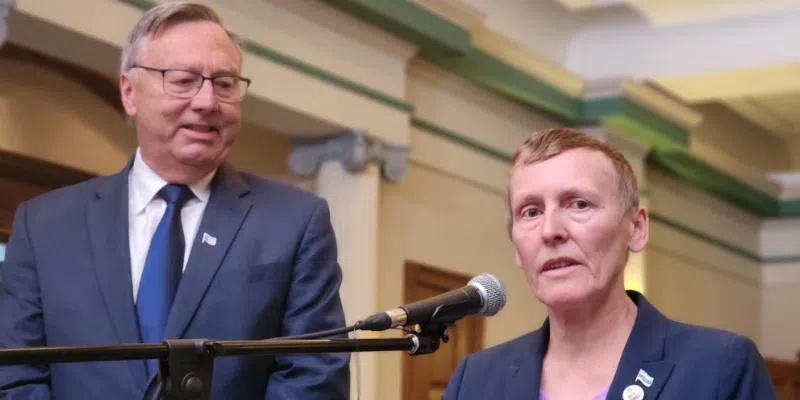
I watched Kelly McIntosh, our newest federal health minister, step up to the microphone outside the Parliament building last Tuesday. The November wind whipped at her scarf as she made her first major policy announcement since taking office three weeks ago. The crowd of journalists huddled closer, not just for warmth but to catch every word of what might signal a new direction for Canada’s strained healthcare system.
“Every Canadian deserves timely access to quality healthcare, regardless of their postal code,” McIntosh declared, her breath visible in the cold air. “This isn’t just about reducing wait times—it’s about restoring trust in a system that has been the bedrock of our national identity.”
Standing there on Parliament Hill, I couldn’t help but remember the stories I’d gathered over the past year—the mother in rural Manitoba who drove her son three hours to see a specialist; the elderly couple in Newfoundland who moved in with their daughter in Toronto to access cancer treatments; the Indigenous communities in Northern British Columbia still waiting for basic primary care services that urban Canadians take for granted.
McIntosh’s announcement comes at a critical moment. According to Statistics Canada, nearly 5.2 million Canadians reported not having a regular healthcare provider in 2023, representing almost 15 percent of the population. The situation is even more dire in rural areas, where physician shortages have reached crisis levels.
The minister outlined her “Five-Point Acceleration Plan” which includes $1.4 billion in immediate funding for provinces to expand primary care networks, particularly in underserved regions. The plan also proposes streamlined credential recognition for internationally trained medical professionals—a potential game-changer given that thousands of qualified immigrant doctors currently work outside their profession due to licensing barriers.
“We’re facing the consequences of decades of short-term thinking,” Dr. Samira Ahmed, President of the Canadian Medical Association, told me during a phone call after the announcement. “Minister McIntosh’s focus on primary care access is crucial, but implementation will be the real test. We’ve heard promises before.”
When I visited the Northern Health Centre in Prince George last month, Dr. James Wilson described the cascading effects of primary care shortages. “Without family doctors, people use emergency rooms for non-emergency care. This creates backlogs, burnout among staff, and ultimately worse outcomes for everyone,” he explained, gesturing toward a waiting room filled to capacity on a Tuesday afternoon.
Indigenous health leaders have cautiously welcomed McIntosh’s commitment to expand culturally appropriate healthcare services. The plan includes $220 million specifically earmarked for Indigenous-led health initiatives.
“Access isn’t just about having a clinic nearby,” explained Sarah Cardinal, health director for the Carrier Sekani Family Services, when I interviewed her in her office overlooking the Fraser River. “It’s about creating spaces where our people feel safe, respected, and understood. A doctor who doesn’t understand our history can’t fully understand our health needs.”
The minister’s plan acknowledges this reality, promising to double the number of Indigenous healthcare providers through expanded education pathways and community-based training programs.
For urban Canadians, wait times remain the most visible symptom of system strain. The Canadian Institute for Health Information reported that in 2023, only 65 percent of patients received hip replacement surgery within the recommended six-month timeframe—down from 71 percent before the pandemic.
McIntosh’s proposal includes a controversial element: standardized national benchmarks for acceptable wait times across procedures, with financial penalties for provinces that consistently fall short. This approach has already generated pushback from Quebec and Alberta, where premiers have framed it as federal overreach into provincial jurisdiction.
“The constitution is clear on healthcare being a provincial responsibility,” Premier Marc Lavoie of Quebec stated in response. “We welcome federal funding, but not federal micromanagement.”
Walking through Toronto General Hospital’s cardiac unit last spring, I watched healthcare providers moving with determined efficiency despite the system’s challenges. Nurse practitioner Elena Mikhailov described the daily reality behind the statistics.
“Politicians talk about wait times like they’re just numbers,” she said, checking a patient’s chart between consultations. “But each day someone waits is another day of pain, anxiety, and sometimes deterioration. Behind every statistic is someone’s parent, child, or partner.”
McIntosh seems to recognize this human element. Her plan includes a new patient advocacy office within Health Canada, designed to elevate individual experiences and identify systemic patterns that might otherwise go unnoticed.
The path forward remains uncertain. Previous federal-provincial health agreements have produced mixed results, and the current landscape of provincial-federal tensions complicates implementation. The Canadian Health Coalition has expressed concern that the plan doesn’t adequately address the growth of private healthcare options, which they argue undermines universal access.
“We need to strengthen public healthcare, not create escape hatches for those who can afford to pay,” Coalition spokesperson Jean Tremblay emphasized when I called him for comment.
As winter settles over Canada, bringing its annual surge in respiratory illnesses and hospital admissions, the resilience of our healthcare system will again be tested. Whether McIntosh’s vision translates into meaningful change remains to be seen, but the urgency is undeniable.
“Healthcare isn’t just another portfolio,” McIntosh said as she concluded her announcement, her voice carrying across the parliamentary lawn. “It’s the promise we make to each other as Canadians—that when you’re sick, scared, or vulnerable, you won’t face it alone.”
As the crowd dispersed and reporters hurried to file their stories, I lingered, watching parliamentary staffers clear away the podium. The question hanging in the cold air wasn’t whether McIntosh’s goals were worthy—it was whether the complex, multi-jurisdictional healthcare system that has both served and frustrated Canadians for generations could transform quickly enough to meet today’s challenges.


