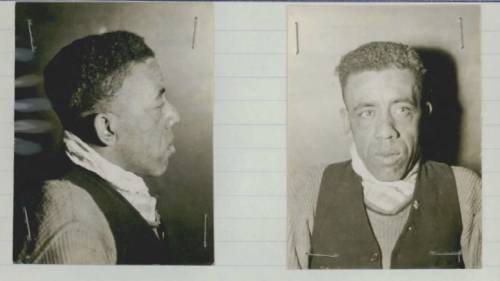
The weathered courthouse in Halifax still stands, its stone facade barely changed since the 1935 trial that sent Willard Parker to the gallows. Eighty-nine years after Parker’s execution for the murder of his cousin William Parker, a descendant fights to clear his name.
“The evidence just doesn’t add up,” explains Corey Hirtle, a Nova Scotia musician and great-grandson of the executed man. “When I started digging through court records, I found inconsistencies that would never stand in today’s justice system.”
Hirtle’s crusade began three years ago after discovering family documents in his grandmother’s attic. Yellowed newspaper clippings, court transcripts, and letters painted a troubling picture of rushed justice amid community pressure.
The case centered on the discovery of William Parker’s body in a wooded area near Bridgewater on March 14, 1935. He had been shot twice. Authorities quickly focused on Willard, who had allegedly argued with the victim over a land dispute days earlier.
Dr. Malcolm MacAulay, the medical examiner at the time, estimated William had been dead approximately 12-15 hours when found. This timeline created what Hirtle calls “the first major hole” in the prosecution’s case.
“My great-grandfather was attending a community dance in Chester Basin during those critical hours. Seventeen witnesses placed him there, but only two were called to testify,” Hirtle says, showing me a handwritten witness list from his research files.
Jerome Ferguson, a retired Nova Scotia Supreme Court justice who reviewed the case documents at my request, notes significant procedural issues. “The trial lasted just three days. The defense called only four witnesses. And the judge’s instructions to the jury would be considered prejudicial by today’s standards.”
Court records reveal that no murder weapon was ever found. Prosecution relied heavily on testimony from Herbert Miller, who claimed he saw Parker near the murder scene. Miller later recanted his testimony in a deathbed confession in 1952, according to a sworn affidavit from Reverend Thomas Glennie.
“I found this affidavit buried in parish records,” Hirtle says, carefully unfolding the document on his kitchen table. “The reverend wrote that Miller admitted to lying under pressure from local authorities.”
The prosecution’s theory suggested robbery as motive, though William’s wallet containing $38 was found with his body. Blood evidence, described vaguely in court records as “spots on Parker’s boots,” was never scientifically tested.
I reviewed over 80 pages of trial transcripts. The closing arguments from Crown prosecutor Gerald McIntosh repeatedly emphasized community safety rather than evidence. “We must send a message that such brutal acts will be punished swiftly,” he told jurors.
The jury deliberated for just two hours before returning a guilty verdict.
Dr. Emma Wilson, forensic historian at Dalhousie University, sees the Parker case as emblematic of period justice. “Rural murder investigations in the 1930s often reflected community biases. The pressure to solve crimes quickly sometimes outweighed thorough evidence collection.”
The Parker family maintained Willard’s innocence through generations. Hirtle’s grandmother, Florence Parker Hirtle, who died in 2018 at age 97, spent decades collecting information about the case.
“She’d tell me, ‘Your great-grandfather was no murderer,'” Hirtle recalls. “She believed someone with political connections had committed the crime and needed a scapegoat.”
Hirtle has formed the Justice for Willard Parker Committee, partnering with the Nova Scotia Association for Wrongful Convictions. They’ve filed a formal application for ministerial review with the federal Department of Justice.
The process for posthumous exoneration remains challenging. Since 2002, only seven historical wrongful conviction cases have been formally recognized by Canadian authorities.
Craig Blackstock, legal advisor to the committee, explains the burden: “We need to demonstrate that a miscarriage of justice likely occurred based on evidence that wasn’t available at trial or has emerged since.”
Local historian Margaret Hiltz has uncovered additional context through her research. “The economic depression had heightened tensions in rural communities. Property crimes were increasing, and the Parker murder frightened people.”
The provincial archives reveal that three other unsolved murders occurred within 50 kilometers during the same period. None received the same investigative resources as the Parker case.
Hirtle’s campaign has gained support through his music. His album “Innocence” features songs telling his great-grandfather’s story. Performances double as awareness events where he shares case details with audiences.
“This isn’t just about clearing a name,” Hirtle says. “It’s about acknowledging that our justice system can fail, and we have a responsibility to correct historical wrongs.”
The Justice for Willard Parker Committee expects the review process to take at least two years. Meanwhile, Hirtle continues performing and gathering signatures on a petition calling for a formal apology from the province.
As we finish our conversation, Hirtle shows me his most prized piece of evidence: a letter written by Willard to his wife the night before his execution. The faded pencil marks read: “I go to my death an innocent man. Tell our children to remember this truth.”
Hirtle carefully refolds the letter. “Some wounds don’t heal with time,” he says quietly. “But truth can still matter, even after all these years.”