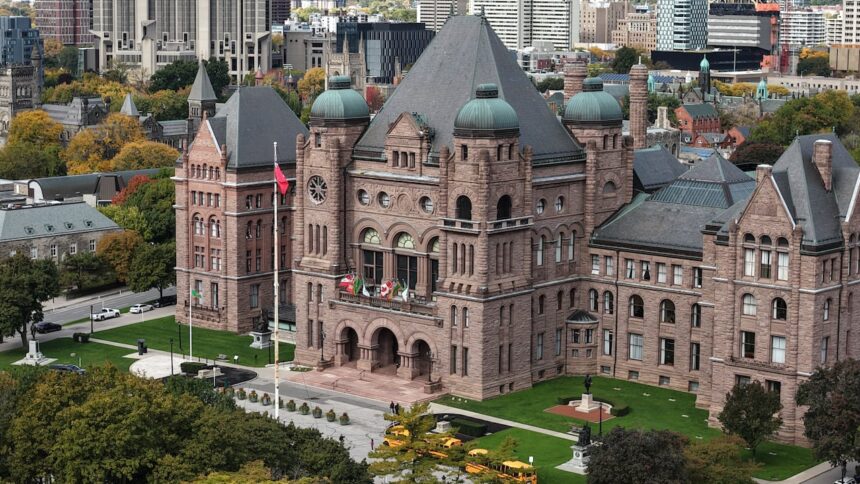
I’ve spent the last three days tracking the contentious education reform bill as it moves through Queen’s Park. What began as a routine legislative update has morphed into something of a political firestorm between the Ford government, opposition parties, and education stakeholders across Ontario.
In committee rooms and hallway scrums, the Progressive Conservative government has been defending Bill 124, dubbed the “Education Modernization Act,” as necessary medicine for Ontario’s struggling school system. Education Minister Stephen Lecce framed the bill as “putting students first” during Tuesday’s heated question period.
“This legislation represents the most significant update to Ontario’s education framework in over a decade,” Lecce told legislators. “We’re responding directly to what parents have been asking for – more transparency, more choice, and better preparation for the jobs of tomorrow.”
But critics tell a different story. Ontario Secondary School Teachers’ Federation president Karen Littlewood described the reforms as “a direct assault on public education” during Wednesday’s committee hearings. Her testimony highlighted concerns that allowing more private operators into the education space could divert resources from already strained public schools.
The 187-page bill contains several controversial provisions that have education circles buzzing. Most contentious is the expansion of charter school approvals and new pathways for private education providers to receive public funding through a voucher-like system for specific student populations.
“We’re creating more educational pathways, not fewer,” said Premier Doug Ford during a press conference at a Brampton elementary school yesterday. “Parents deserve options when the system isn’t meeting their child’s needs.”
The numbers behind the debate paint a complex picture. A recent Angus Reid poll shows Ontarians nearly evenly split, with 48% supporting aspects of education reform while 46% oppose the specific measures in the bill. The remaining 6% are undecided – a small but potentially crucial segment as the government seeks public buy-in.
During committee hearings, I watched as Annie Kidder from People for Education presented data showing that 83% of Ontario school boards reported increased financial pressure last year. “Any legislation that potentially diverts funds from public education requires extraordinarily careful consideration,” Kidder testified. “We’re concerned this bill moves too quickly in too many directions without addressing core funding challenges.”
The NDP opposition has been relentless in their criticism. Education critic Marit Stiles has tabled over 40 amendments, most focused on removing what she calls “privatization backdoors” in the legislation.
“What we’re witnessing is classic shock doctrine politics,” Stiles told me during a brief interview between committee sessions. “The government manufactures a crisis in education, then offers privatization as the solution. Ontarians aren’t falling for it.”
Walking through the halls of Queen’s Park yesterday, I encountered small groups of teachers and parents holding impromptu demonstrations. Mississauga teacher David Chen, who took a personal day to attend the proceedings, expressed frustration that classroom perspectives were being sidelined.
“I’ve taught for 16 years, and we’re facing unprecedented challenges – mental health issues, learning recovery after the pandemic, technology integration,” Chen said. “None of those real problems get solved by this bill.”
The legislation also includes provisions to centralize curriculum control, giving the Minister’s office more direct oversight of classroom content. This aspect has received less public attention but has constitutional experts concerned.
University of Toronto education policy professor Alicia Fernandez called this shift “potentially the most significant long-term change” in the bill. “When curriculum decisions move from educators to political appointees, we risk education becoming more ideological and less evidence-based,” she explained.
Budget implications loom large over the debate. The Financial Accountability Office of Ontario has estimated implementation costs at approximately $240 million over three years, though government officials dispute this figure as “speculative and premature.”
Progressive Conservative MPP Lorne Coe, who chairs the Standing Committee on Social Policy reviewing the bill, defended the government’s approach during yesterday’s proceedings. “We’re making thoughtful, necessary changes based on extensive consultation,” Coe stated. “The status quo isn’t serving students as well as it should.”
But my review of the consultation records shows something interesting – of the 4,800 submissions received during the consultation period, approximately 76% expressed opposition to key provisions in the bill, according to documents obtained through Freedom of Information requests by opposition researchers.
The bill’s trajectory seems clear, with final reading expected next week and passage all but assured given the government’s majority. However, education stakeholders are already signaling that implementation may face significant hurdles.
“This legislation may pass, but making it work in actual schools with real students is another matter entirely,” Ontario Principals’ Council president Mary Kennedy told me. “The devil is always in the implementation details.”
As debate continues in the legislature, I’ll be watching for any last-minute amendments that might address stakeholder concerns. The government has already signaled openness to adjusting timelines for certain provisions.
For parents and students wondering what this means for their schools next September, the picture remains frustratingly unclear. Most provisions would be phased in over three years, with regulatory details still to be determined through a consultation process that would follow the bill’s passage.
What’s certain is that Ontario’s education landscape is heading for its most significant restructuring in recent memory – whether that represents progress or peril depends entirely on where you stand in this increasingly polarized debate.