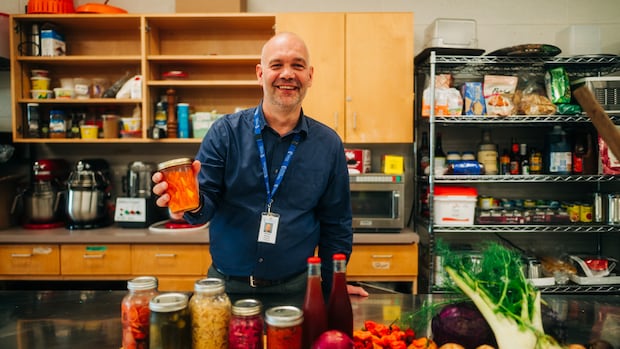
The quiet bubbling and earthy aroma fills the basement laboratory at Western University where microbiologist Gregor Reid carefully lifts the lid on what looks like ordinary sauerkraut. But this isn’t just any fermented cabbage – it’s part of a groundbreaking Ontario research initiative exploring how traditional preservation techniques might help solve modern health challenges.
“What your grandmother knew intuitively, we’re now proving scientifically,” says Reid, examining the thriving microbial community under a microscope. “These foods have sustained human health for thousands of years across every culture on the planet.”
I’m standing in one of several labs across Ontario where researchers are documenting the relationship between fermented foods and our gut microbiome – that complex ecosystem of bacteria living inside us that science increasingly shows influences everything from digestion to mental health.
This province-wide initiative, funded through a $3.5 million grant from the Ontario Research Fund, brings together specialists from Western, the University of Guelph, and Toronto’s St. Michael’s Hospital to create what they’re calling the “Fermentation Science Collaborative.”
Their timing couldn’t be better. While sales of commercial yogurt, kombucha and kimchi have exploded in recent years, many Ontarians remain disconnected from the fermentation practices that sustained their ancestors for generations.
In the small town of Norwich, about 90 minutes southwest of Toronto, I meet Maggie Nolan, a third-generation sauerkraut maker who’s been recruited as a community partner in the research project. Her family’s recipe dates back to their arrival from Germany in the 1880s.
“My grandmother never threw anything away,” Nolan tells me as she massages salt into shredded cabbage in her farmhouse kitchen. “Fermentation was how they survived winter. They didn’t call it probiotic – they called it dinner.”
The research team is analyzing traditional recipes like Nolan’s alongside commercial products. Early findings suggest homemade ferments often contain more diverse bacterial communities than their mass-produced counterparts, which typically undergo pasteurization that kills off beneficial microbes.
“We’re seeing striking differences between industrial and traditional methods,” explains Emma Allen-Vercoe, a microbiologist at the University of Guelph and principal investigator on the project. “Many commercial products prioritize shelf stability over microbial diversity, which may limit their health benefits.”
Allen-Vercoe’s team has isolated over 400 bacterial strains from Ontario-made fermented foods, including several previously undocumented species that may have unique health properties. Their preliminary research shows these microbes can help strengthen gut barrier function and reduce inflammatory markers in laboratory models.
The health implications extend beyond gut health. At St. Michael’s Hospital in Toronto, gastroenterologist Johane Allard is studying how fermented food consumption affects patients with non-alcoholic fatty liver disease, which affects an estimated 25 percent of Canadian adults.
“We’re seeing promising evidence that regular consumption of traditionally fermented foods may help modulate metabolic disorders,” says Allard, whose clinical trial involves 200 patients across Ontario. “The microbes in these foods appear to influence how we process fats and sugars.”
This scientific validation comes as Indigenous communities across the province work to reclaim traditional fermentation practices that were disrupted through colonization. In Thunder Bay, Anishinaabe food sovereignty advocate Robin McGregor has partnered with the research team to document fermentation techniques that preserved berries, fish and wild game.
“Our ancestors understood food as medicine,” McGregor explains during a workshop where participants learn to make fermented blueberries. “These practices weren’t just about survival – they connected us to the land and each other. Reclaiming them is an act of healing.”
For many immigrants, fermented foods provide a living connection to their cultural heritage. At Toronto’s Crossroads Public Market, Korean-Canadian vendor Soo-Jin Park has been selling homemade kimchi for fifteen years.
“When I first started, only Korean customers would buy it,” Park tells me, chopping napa cabbage with practiced precision. “Now I get people from every background asking about fermentation techniques. The science is confirming what our culture always knew.”
The Ontario research initiative isn’t just studying these foods – it’s working to expand access to them. In partnership with public health units, the team has developed fermentation workshops targeting communities with limited food access, including a pilot program in five Long-Term Care facilities.
“The beauty of fermentation is its accessibility,” says public health nutritionist Maya Devi, who coordinates the workshop series. “These techniques can transform affordable ingredients like cabbage into nutrient-dense foods with extended shelf life. It addresses both nutrition and food security.”
For those interested in exploring fermentation at home, the researchers emphasize starting with simple techniques. “Sauerkraut is an ideal beginning point because you only need cabbage, salt, and a clean jar,” advises Allen-Vercoe. “The microbes already present on the cabbage do the work for you.”
The research team maintains that while commercial products can provide benefits, making your own ferments offers advantages beyond nutrition. “The process connects you to food in a way we’ve largely lost,” says Reid. “You’re not just consuming something – you’re participating in a living transformation.”
As Ontario’s population continues to diversify, researchers see potential for a cross-cultural fermentation renaissance. The project has documented over 150 distinct fermentation techniques practiced across the province’s cultural communities, from Ethiopian injera to Italian salumi.
As I leave Western’s laboratory, Reid hands me a small jar of sauerkraut made from the lab’s research batch. “The science is compelling,” he says, “but sometimes the most convincing evidence is what happens when you simply make these foods part of your daily life.”
That night, I add a forkful of the tangy cabbage to my dinner plate – a small taste of what could be Ontario’s next public health revolution, fermenting one kitchen at a time.