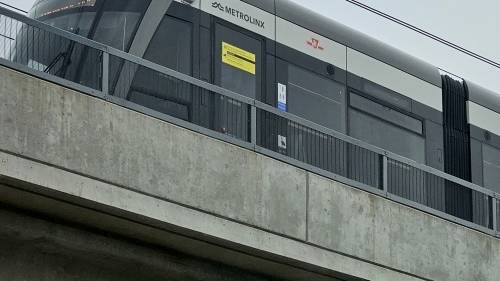
After years of delays and construction headaches that have tested the patience of Torontonians, Metrolinx is finally preparing to open two major light rail transit lines this winter. For residents who have endured detours, noise, and disruption across the city, the announcement comes as welcome—if long overdue—news.
“The finish line is finally in sight,” said Phil Verster, CEO of Metrolinx, during yesterday’s announcement at the future Science Centre Station. “Both the Eglinton Crosstown and Finch West LRT projects have reached their final testing phases with full service expected to begin in the early months of 2024.”
The Eglinton Crosstown LRT has become somewhat infamous among Toronto residents. Originally scheduled to open in 2020, the 19-kilometer line with 25 stations has faced numerous setbacks including construction challenges, contractor disputes, and most recently, technical issues with the train control systems.
Walking through Eglinton Avenue’s Little Jamaica neighborhood last week, I spoke with several small business owners who have weathered the decade-long construction storm. Marcia Campbell, who has operated her Caribbean restaurant for 15 years, expressed mixed emotions about the announcement.
“I’ll believe it when I see the trains running,” Campbell told me while preparing for the lunch rush. “Half my neighbors couldn’t survive the construction. Those of us still standing deserve to see this thing work.”
The economic impact of the prolonged construction can’t be overstated. A 2022 study from the Toronto Association of Business Improvement Areas estimated that businesses along the Eglinton corridor experienced revenue losses between 35-50% during peak construction periods, with nearly 140 storefronts closing permanently.
Meanwhile, the Finch West LRT, stretching 11 kilometers from Keele Street to Humber College, has faced its own challenges but appears closer to completion. Transportation Minister Prabmeet Sarkaria confirmed that trial operations are underway with operators now running test trains on the full route.
“These projects represent the largest transit expansion in Toronto’s history,” Sarkaria noted. “When completed, they’ll transform how people move across our city and connect communities that have historically been underserved by rapid transit.”
The price tag for these transformations has been substantial. The Eglinton Crosstown’s budget has ballooned from initial estimates of $5.3 billion to now exceeding $12 billion, according to provincial auditor reports. The Finch West line has seen more modest increases, with costs now hovering around $2.5 billion.
For transit advocate Steven Farber, associate professor of urban planning at the University of Toronto, the value will ultimately outweigh the costs and delays.
“Cities that invest in comprehensive transit networks see returns that extend far beyond ridership numbers,” Farber explained during our phone conversation. “We’re talking about reduced congestion, lower emissions, increased property values, and most importantly, improved access to jobs and opportunities for residents across income levels.”
The timing of the winter opening adds another layer of complexity. Transit systems typically prefer launching new services during milder seasons when weather-related issues are less likely to complicate operations. However, Metrolinx officials insist their winter contingency planning is robust.
“We’ve been conducting cold-weather testing for months,” said James Woo, Metrolinx’s head of operations. “Everything from de-icing procedures to snow clearing protocols has been established and tested repeatedly.”
The real-world effectiveness of these measures remains to be seen. Toronto winters can be unpredictable, with conditions ranging from mild and wet to extreme cold and heavy snowfall. The TTC’s existing streetcar network often experiences challenges during severe winter weather, raising questions about how the new LRT vehicles will perform.
City Councillor Josh Matlow, whose ward includes portions of the Eglinton Crosstown route, expressed cautious optimism about the timeline but emphasized the need for accountability.
“My constituents have heard promises before,” Matlow said during yesterday’s council meeting. “What they need now is certainty that the system will be safe, reliable, and actually open when Metrolinx says it will. After a decade of disruption, that’s not too much to ask.”
For daily commuters like Elijah Morris, who travels between his home in Flemingdon Park and workplace near Yonge and Eglinton, the LRT can’t open soon enough.
“My commute takes over an hour each way right now,” Morris told me while waiting at a temporary bus stop. “The train would cut that in half. That’s two hours of my life back every day.”
As testing continues and Metrolinx prepares for launch, questions remain about integration with existing TTC services, final station amenities, and whether the winter 2024 timeline will actually stick. For a city that has waited this long, a few more months might seem manageable – if indeed this represents the light at the end of a very long tunnel.
In the meantime, businesses along both corridors are preparing for what they hope will be a post-construction renaissance. The true measure of these projects’ success won’t just be whether trains run on schedule, but whether they fulfill their promise of connecting communities and creating more equitable access across a city that desperately needs transportation solutions.